What Happens When the Next Generation Takes Over the Farm
- Kai Vorasiwa

- 3 days ago
- 2 min read
Some of the most important shifts in a food system don't happen at a conference table. They happen on a single plot of land, over a generation, because one person decided the way things had always been done wasn't the way they had to keep being done.
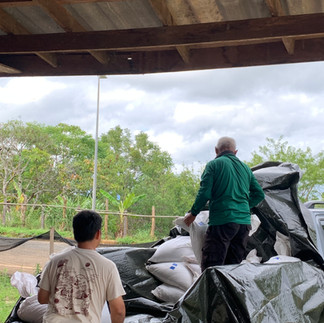
That's what we found on a recent visit to a coffee farm outside Chiang Mai.

A Plot Built on Conventional Ground
The land itself isn't new. The farmer's parents worked it the way most of their generation did — conventional methods, focused on yield and getting the crop to market, without much room to ask what the land needed in return. It's a familiar story across smallholder agriculture in Thailand: practical decisions made under real pressure, not a lack of care.
What's less familiar is what happened next.
The Son Who Asked a Different Question
When the next generation took over the plot, he didn't just inherit land — he inherited a set of assumptions about how coffee farming was supposed to work. Instead of continuing on the same terms, he started reworking the farm around a different question: not just how much can this land produce, but what does this land, this soil, and this community actually need to keep producing well.
That question led to changes across three fronts at once, not just one:
Environmental — moving toward practices that work with the land's existing ecology rather than depleting it, treating soil health as a long-term asset rather than a fixed backdrop
Social — rethinking how labor, knowledge, and decision-making are shared on the farm, rather than running it purely top-down
Financial — building a model that doesn't force a trade-off between sustainability and staying viable — proving the two don't have to compete
Walking the plot with him, what stood out wasn't a single dramatic change. It was how deliberately the three fronts were tied together — a shift in one area was always considered against what it meant for the other two.
Why This Matters Beyond One Farm
This is exactly the kind of story that's easy to flatten into a single word — "sustainable" — and lose everything that made it real. What actually happened here was slower and more specific: a person reconsidering an inherited system, one decision at a time, and being honest about the trade-offs along the way.
It's also a story that doesn't work as something we simply retell. It works because we walked the land, heard the decisions explained in his own terms, and understood the "why" behind changes that would look invisible from the outside. That's the whole premise behind how we design learning experiences at co.conscious — systems make sense when you're standing inside them, not when they're summarized for you.
Carrying This Forward
Visits like this one shape how we think about future editions of The FAIR(ly) Trail and who we bring into rooms and onto land like this. A second-generation farmer rethinking his family's plot is exactly the kind of upstream knowledge we want more people — professionals, partners, and communities alike — to encounter directly, not secondhand.
Want to visit farms like this one, or bring your team into direct conversation with the people rebuilding their land? Get in touch.








Comments